Why We Need a Why
Feeling happy is a pretty universal goal, but we can’t always put a finger on exactly what it means. Everyone has fleeting moments of joy or elation. But when we ask someone, Are you happy? we’re usually talking about a deeper sense of contentment.
We might feel it when we’re overcome with wonder about the world around us or when we notice beauty and love in our lives. Happiness can also go hand-in-hand with gratitude as we take stock of our good fortune. Although we’re able to recognize its presence, it can be strangely difficult to put into words.
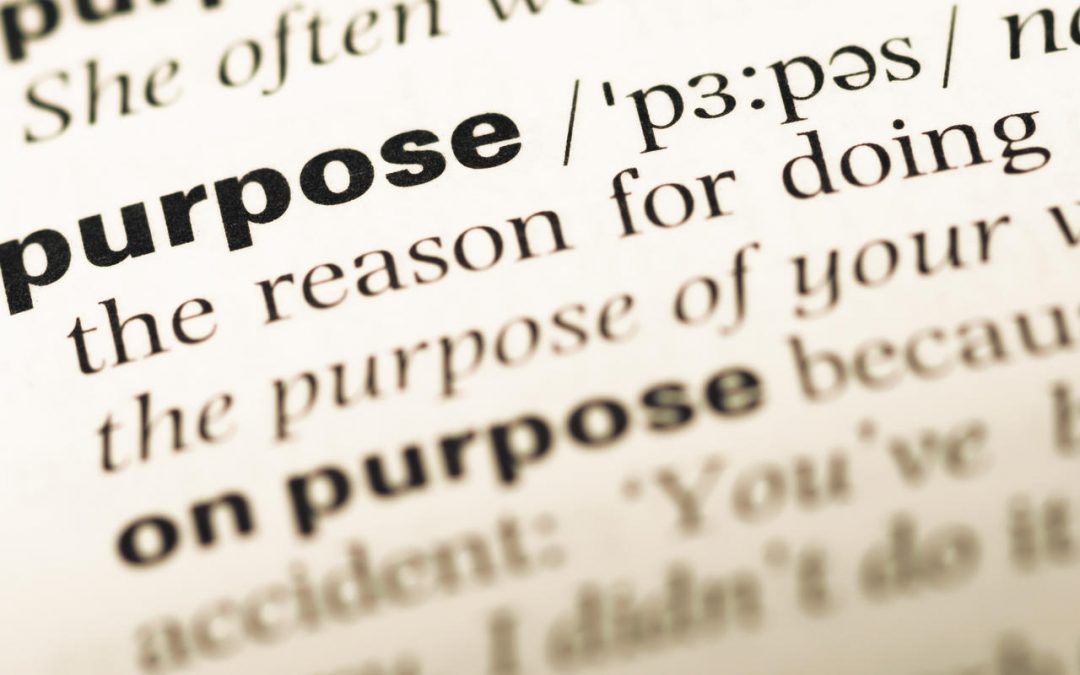
A random poll of friends and family members would probably result in a different definition of happiness from each of them. But as I settle into my middle age, I’m beginning to feel that true happiness – the broader, longer-lasting, soul-fulfilling kind – is almost synonymous with another noun most of us take for granted: purpose.
Research increasingly suggests that having a purpose is the key to a meaningful life — and a happy life. Purpose and meaning are connected to what researchers call eudaimonic well-being. This is distinct from, and sometimes inversely related to the feeling of elation (hedonic well-being). One constitutes a deeper, more durable state, while the other is superficial and transient.
Way back in eighteenth-century Europe, a movement started to help people with emotional struggles rehabilitate through creativity. It didn’t take long to discover that the therapeutic value of engagement in purposeful activity was radically more effective than previous treatment models that were associated with brutality or idleness. This idea eventually became the origin of Occupational Therapy (OT).
There’s a reason the philosophy of OT has withstood the test of time. Having a purpose – something that makes us feel alive and absorbed – is as vital to our well-being as food and water. Purpose simultaneously connects us to the rest of the universe and brings us back into ourselves. We can find it both in a broader life-calling and in discrete events. Purpose becomes the link between us and our environment. We become more and, as Occupational Therapists see regularly, we become well.
Scale doesn’t matter as much as fit. The focus of your purpose can be solitary, quiet, and private. It simply has to embody something that fills you up and gives you a sense of personal enlargement, of swelling out beyond yourself. You know you are aligned with your purpose because your power grows. You feel a part of something bigger than yourself. Time flies.
You may find purpose by nurturing the relationships in your life, expressing your unique talents through the cultivation of a hobby, pursuing a stimulating career, or contributing to your community. The avenues are limitless. But if you’re feeling a gap, try asking yourself the question – and then, more importantly, take the important step of answering it.
What draws you in, ignites your energy, and pulls you forward?

About the Author
Kerry Galarza, MS OTR/L is the Clinical Director and an occupational therapist at Elmhurst Counseling. She provides specialized assessment and intervention with children of all ages and their families. Kerry engages clients with naturally occurring, meaningful home-based methods to empower autonomy and maximize functioning.